3 Moves That Fill Seats: Instagram Promotion for Event Organizers
3 Moves That Fill Seats: Instagram Promotion for Event Organizers

Run Reels to get discovered, boost your best-performing organic posts with targeted ads, and send every single click to one registration link in your bio or Stories. That combination works because Instagram’s own guidance points marketers toward watch time and interaction signals for Reels performance, and pairing that reach with paid amplification turns casual scrollers into tracked registrations.
TL;DR:
- Use a hero Reel to maximize organic reach and plan boosting it once it gains early traction to drive registrations effectively.
- Focus paid ads on conversions by aligning objectives with campaign stage, layering audiences, and only boosting creative that performs well organically.
- Leverage micro-influencers for targeted, local reach and turn attendees into promoters through user-generated content and simple attribution methods.
- Track cost per registration, click-through rates, and sign-up conversion rates daily during the campaign to optimize spending and content performance.
- Integrate Instagram efforts with stable event listings and email reminders to extend reach and improve registration follow-through.
Table of Contents
- Your quick-action campaign checklist
- Which Instagram formats work best for each promotion goal
- How to set up Instagram ads that drive registrations
- Influencer and partner outreach that scales your reach
- What to measure and how to keep improving mid-campaign
- When to start promoting and how much to budget
- How a local discovery platform complements your Instagram push
- User-generated content rights and permissions
- Integrating Instagram promotion with other marketing channels
- My take: where to focus when time is short
- List your event where Instagram traffic can actually land
- FAQ
- Sources
Your quick-action campaign checklist
Grab your coffee and knock these out before you do anything else. This is the backbone of a campaign that actually converts scrollers into attendees, not just likes.
- Create a dedicated event handle or a short, memorable hashtag so every post, Story, and tag rolls up into one searchable thread.
- Swap your bio link for a single registration or ticketing URL, no exceptions.
- Produce one hero Reel, one Story package, and one feed graphic before you post anything else.
- Pick your strongest organic asset and set it aside to boost once it shows early traction.
- Build a Meta Ads campaign with a conversion objective, connected to your pixel or Conversion API.
- Line up a livestream moment, a UGC prompt, and at least one influencer outreach message on your calendar.
- Define your KPIs now and tag every link with UTM parameters so you know exactly what drove each registration.
Which Instagram formats work best for each promotion goal
Different formats pull different weight, and knowing which lever to pull saves you from wasting good creative on the wrong job.
- Reels win on reach. Instagram’s engagement guidance points to watch time, like rate, and send rate as the signals that push content into new feeds, which makes Reels your discovery engine.
- Stories create urgency. Countdown stickers, swipe-up links, polls, and question stickers turn a passive viewer into someone who taps through right now.
- Feed posts build credibility. Speaker lineups, agenda highlights, and venue shots give your event a sense of permanence that Stories can’t, since feed posts stick around and get shared.
- Live sessions close the gap between curiosity and commitment. Live-streaming during the promotion window makes viewers meaningfully more likely to register, according to event marketing data from Zipdo.
A sample four-week run: Week 4 out, drop your hero Reel and open registration in your bio. Week 3, follow with a Story countdown and a feed post featuring a speaker or vendor. Week 2, repost UGC and run a poll Story asking what attendees are most excited about. Week 1, push daily Stories with a swipe-up link and a final feed reminder post the morning of.
Repurpose relentlessly: cut your hero Reel into three Story clips, pull a still frame for a feed graphic, and caption each one differently so the algorithm sees fresh context instead of a repeat.
Pro Tip: Film your hero Reel first, before any other asset, so every other piece of content can be cut down from it instead of created from scratch.
How to set up Instagram ads that drive registrations
Paid spend works best when it amplifies what’s already proven, not when it tries to save weak creative.
- Pick your objective by stage: use Reach early for awareness, Traffic once you have a landing page ready, and Conversions or Lead Generation once your pixel is firing and you need tracked sign-ups.
- Layer your audiences: start with a custom list of past attendees or email subscribers, build a lookalike from that list, and stack in two or three interest categories tied to your event topic.
- Narrow by location when your event is in-person, since local targeting keeps your budget from paying for impressions outside driving distance.
- Shoot vertical, hook fast: your first three to five seconds need to earn the next three, and every ad needs one explicit call to action, “Register free” or “Get tickets” beats a vague “Learn more.”
- Boost winners, not guesses: let organic posts run for 24 to 48 hours, then put paid dollars behind whichever one earns the strongest save and send rate.
- Combine placements: running the same campaign across Instagram and Facebook placements widens your conversion pool without doubling your setup work, since Meta’s ad manager handles both from one campaign.
Instagram’s ad reach in the United States reached over half of the population by late 2025, according to DataReportal’s Digital 2026 report. That scale means even a modest local budget can reach a meaningful slice of your target area if your targeting is tight.
Influencer and partner outreach that scales your reach
You don’t need a celebrity. You need the right-sized voice for your event’s size.
- Micro-influencers (a few thousand to around 50,000 followers) tend to have tighter, more locally relevant audiences, which makes them the better fit for community meetups and regional events.
- Macro-influencers make sense when your event has a broader draw, like a multi-city tour stop or a large conference, where sheer reach matters more than hyper-local relevance.
- Keep your outreach brief simple: one Reel, two Story mentions, and a unique discount code so you can track exactly how many registrations they drove.
- Turn attendees into promoters with a UGC contest, a giveaway for anyone who tags your event hashtag, or a simple repost-and-shoutout for the best photo.
- Cover brand safety basics: confirm partners disclose paid relationships per Meta’s branded content tools, and always get a quick yes or no on reposting their content before you do.
For a full outreach template and deliverable checklist, our local influencer marketing playbook walks through sample messages you can copy.
Pro Tip: Ask every partner for a unique code or tagged link up front. Without it, you’ll never know which collaboration actually moved registrations.
What to measure and how to keep improving mid-campaign
Tracking the right numbers keeps you from pouring budget into a campaign that looks busy but isn’t converting.
- Cost per registration is your north star metric. If it climbs, something in your funnel, not just your ad, needs a look.
- Click-through rate to registration tells you whether your creative is earning the tap, separate from whether people complete sign-up once they land.
- Registration conversion rate flags landing page or form friction when CTR looks healthy but sign-ups still lag.
- Watch time, saves, and send rate matter as secondary organic signals, since Instagram’s own guidance treats these as the clearest indicators that content is worth showing to more people, per HubSpot’s Instagram engagement report.
Fifty-six percent of event organizers already run paid social advertising, according to Zipdo’s 2026 event marketing statistics, which means your competition for attention in the feed is real and growing.
Set up your Meta pixel or Conversion API before launch, tag every link with UTM parameters, and map each ad to a specific event so you’re not guessing later which creative drove which sign-up. Check ad performance daily for the first week, refresh creative weekly once fatigue sets in, and scale budget only on campaigns holding a steady or falling cost per registration. For a deeper look at attribution and reporting rigor, this PR analytics guide is worth a read.
When to start promoting and how much to budget
Timing and budget depend heavily on your event’s size and lead time, but a few patterns hold up across most local and regional events.
- Local meetups and single-night events: start promoting two to three weeks out, with daily Stories in the final week.
- Conferences and multi-day events: start six to eight weeks out, with an early-bird push in week one and steady reminders through the final week.
- Budget split: a rough starting point is 40% toward organic content production, 40% toward paid ads, and 20% toward influencer or partner fees, adjusted as you see what’s converting.
- Scale with event size: a small community gathering might run on a few hundred dollars in ad spend, while a regional conference easily justifies a few thousand, with registrations scaling roughly alongside reach.
- Push timing: lead with an early-bird discount at launch, go quiet with occasional reminders mid-campaign, then close with a final-week countdown push.
Pair your paid push with email reminders in the final week, since attendees who see both channels tend to need fewer nudges to actually complete registration.
How a local discovery platform complements your Instagram push
Instagram gets people excited. A discovery listing gives that excitement somewhere stable to land, especially once your Story link expires in 24 hours.
- Listing your event on a platform like EventHound gives you a permanent, shareable link that doesn’t disappear the way a Story does, which matters when someone wants to share your event three days after you posted about it.
- A simple flow that works well: create your EventHound listing first, drop that listing link in your Instagram bio, then boost your hero Reel to drive clicks straight to it.
- Local discovery traffic tends to complement rather than compete with Instagram reach, since people searching for things to do nearby are often warmer leads than a cold ad impression.
For formatting ideas and templates to pair with your listing, our event promotion ideas roundup has more tactics worth borrowing.
User-generated content rights and permissions
Reposting attendee content feels easy until someone asks why their face is in your ad campaign without asking first.
The baseline rule is simple: a public tag or mention does not automatically give you commercial rights to someone’s photo or video. Always get explicit permission, even a quick comment reply saying “mind if we repost this?” counts, before using someone else’s content in a feed post, Story, or paid ad.
Build this into your UGC prompts from the start. When you launch a contest or a hashtag campaign, state clearly in the rules that entries may be reposted and tag the account every time you do it, both as a courtesy and as a paper trail. For paid use, like turning a great attendee photo into ad creative, get written confirmation, even a simple direct message exchange, since Meta’s ad policies hold you responsible for content rights in campaigns you run.
Keep a simple log: who posted it, when they said yes, and where you used it. If you run a recurring event, you’ll be fielding these requests constantly, and a two-minute tracking habit now saves a messy conversation later. Our ticket giveaway promotions guide walks through contest structures that build permission into the entry process itself, so you’re not chasing it down after the fact.
When in doubt, default to asking. Attendees are almost always flattered to be featured, and the ask itself often turns into another round of engagement for your event hashtag.

Integrating Instagram promotion with other marketing channels
Instagram rarely closes the loop by itself. The people who see your Reel today often register after a second or third touch somewhere else.
Email remains the most reliable closer. Someone who taps your bio link but doesn’t register yet can land on an email list through a simple “save your spot” form, then get a reminder sequence that does the converting your Instagram Stories started. Our email marketing playbook for events covers the reminder cadence that pairs well with a Story-driven funnel.
Your website or landing page needs to match what your Instagram ads promise. If your Reel hook is “early-bird pricing ends Friday,” your landing page needs that same message front and center, not buried under a generic event description.
Local discovery listings, press mentions, and community group shares all extend reach past Instagram’s own audience ceiling. A listing on a platform like EventHound captures people actively searching for things to do nearby, a different intent than someone scrolling Stories, and that combination covers more of the decision journey than either channel alone. If you want a broader view of where a listing fits inside a full marketing stack, our best event marketing platforms shortlist breaks down the options.

Treat each channel as a different stage of the same funnel: Instagram for discovery and urgency, email for follow-through, and a stable listing link for the people who hear about your event secondhand.
My take: where to focus when time is short
If you only do three things, do these: one strong Reel, one boosted ad behind it, and one registration link everywhere. Everything else, extra influencer outreach, a longer content calendar, multiple ad variants, helps, but it’s additive. Cut polish before you cut the core three.
— Gregory
List your event where Instagram traffic can actually land
We built a platform as a home base for the clicks your Instagram campaign generates: a local listing page and discovery features that surface your event to nearby people already searching, along with sponsored placements when you want extra visibility. Organizers typically drop their listing link straight into their Instagram bio, then boost their strongest Reel to send traffic there instead of a page that disappears in 24 hours.
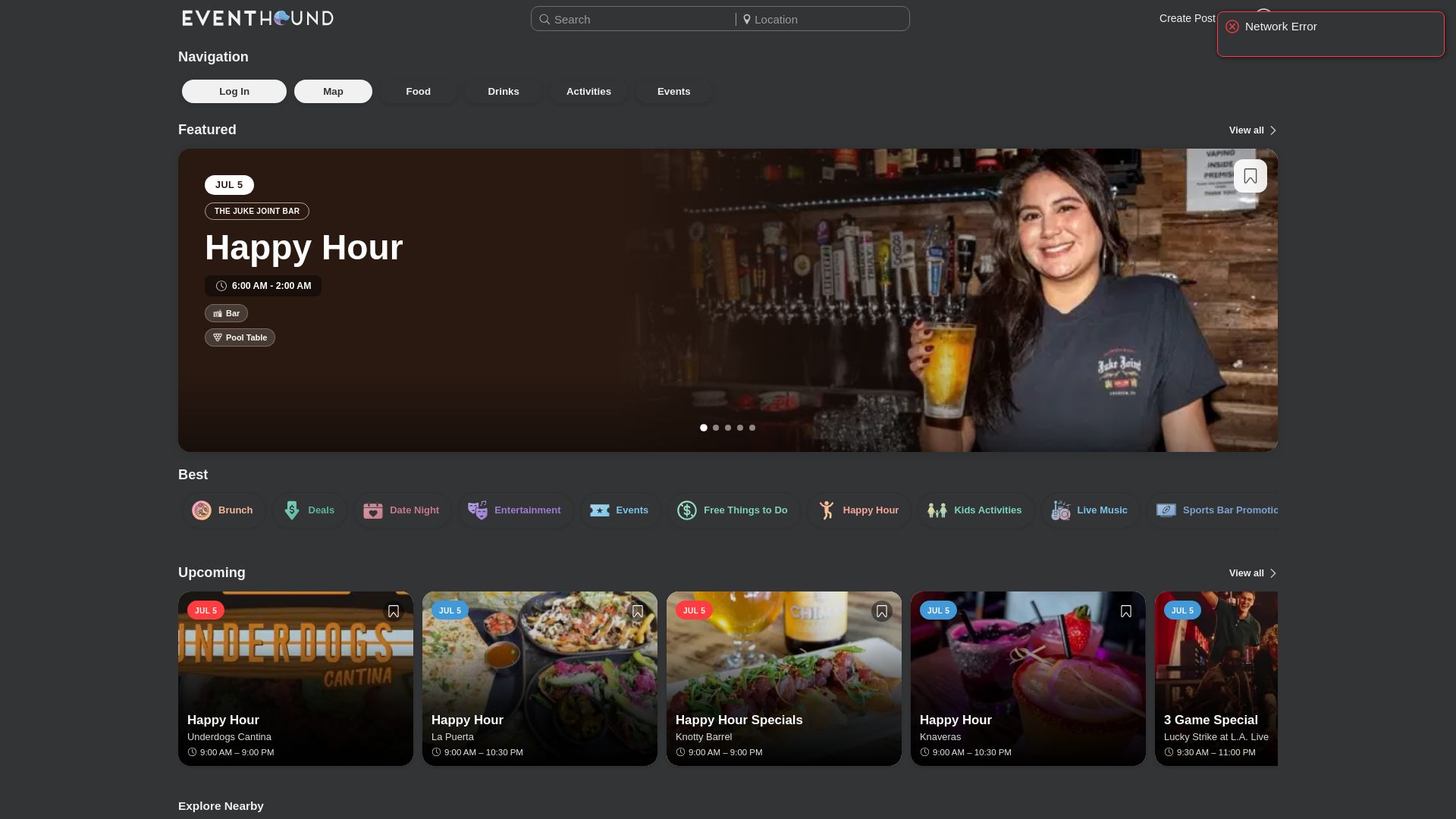
See how it works and get your event listed on EventHound today.
FAQ
How do you run a promotion on Instagram?
Pick one clear goal, like ticket sales or RSVPs, create a Reel built around a strong hook, and point every link to a single registration page. Boost the post once it shows early engagement rather than running ads cold from day one.
What is the 5-3-1 rule on Instagram?
It’s a common content-mix guideline where you share roughly five pieces of curated or community content, three original posts, and one promotional post for every nine posts you publish. It’s a loose framework, not a fixed Instagram policy, so adapt the ratio to your event’s promotion window.
How much do 1,000 impressions cost on Instagram?
Cost per thousand impressions varies widely by audience, season, and competition, so there’s no fixed number to quote. Instead of chasing a CPM target, watch your cost per registration since that reflects what you actually care about.
How do I advertise for an event?
Combine organic Reels and Stories for discovery with a targeted Meta Ads campaign tied to a conversion goal, aimed at a custom or lookalike audience plus local interest targeting. Pair that with a single, consistent registration link in your bio and in every Story.
Sources
- Instagram engagement report (2026) — HubSpot hosted PDF
- Marketing In The Event Industry Statistics 2026 — Zipdo
- Digital 2026: The United States Of America — DataReportal