20 Covers to Break Even: Happy Hour Promotion Math for Operators
20 Covers to Break Even: Happy Hour Promotion Math for Operators
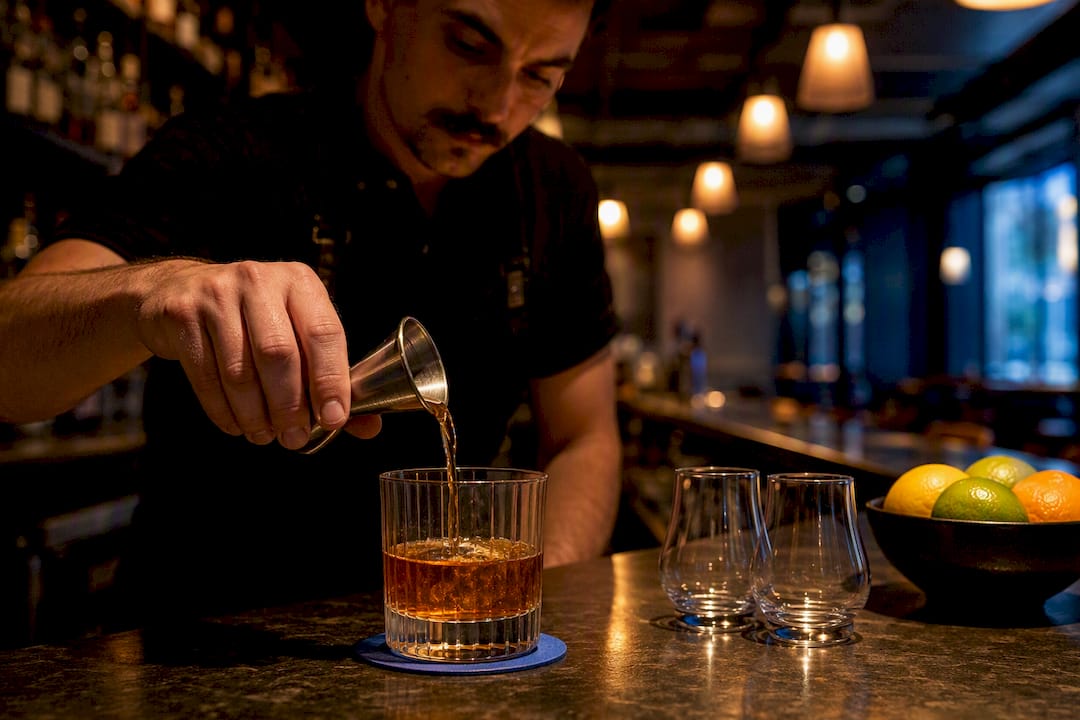
Run the break-even math before you launch anything, and cap your discounts to items with low food and pour cost. That’s the whole rule. A happy hour promotion can absolutely add real profit, not just noise, when you calculate the minimum covers a slot needs and protect contribution margin instead of chasing crowd size. What follows is the operator playbook: ideas by format, the pricing formula, menu design, staffing, promotion timing, and the weekly numbers that tell you whether to keep, kill, or scale what you built.
TL;DR:
- Limiting discounts to items with a food or pour cost at or below 18% ensures that happy hour promotions remain profitable.
- Tighter guardrails such as minimum food spend and recalculate break-even points when adjusting discounts are essential for maintaining margins.
- Proper staffing, pre-batching drinks, and clear operational procedures prevent service burnout and protect profit margins during busy hours.
- Promoting on local discovery platforms with updated details and targeted timing increases walk-in traffic and fills seats efficiently.
- Tracking key metrics like covers, average ticket, contribution margin, and occupancy weekly helps identify whether the happy hour is financially effective.
Table of Contents
- High-Impact Happy Hour Ideas Worth Testing
- How to Price Happy Hour So It Actually Turns a Profit
- Menu Tricks That Push Up the Average Check
- Running Happy Hour Without Burning Out Your Floor
- When and Where to Promote Happy Hour So Seats Actually Fill
- How Do You Know If Your Happy Hour Is Working?
- Getting Found: Listings and Event Platforms That Drive Same-Day Covers
- What Are the Legal Rules Around Happy Hour Promotions?
- Keeping Happy Hour Deals From Being Exploited
- Does Happy Hour Cheapen Your Brand?
- Publisher Perspective: Why Thoughtfully Designed Happy Hours Earn Repeat Customers
- How EventHound Helps Fill Your Happy Hour
- Sources
High-Impact Happy Hour Ideas Worth Testing
Not every format fits every bar. A neighborhood wine bar and a sports pub need different playbooks, even though both are chasing the same 4pm to 7pm window. Sort your ideas by what they’re actually built to do: draw a crowd, protect margin, build repeat visits, or lock in loyalty.
Experience-first formats work because they sell atmosphere, not just price:
- Guided wine or whiskey tasting — 5:00 to 6:30pm, appeals to couples and small groups, staff needs 10 minutes of pre-shift script on the pours being served.
- Spritz or apertivo hour — 4:00 to 6:00pm, leans into a trend that Square’s transaction data shows accelerating fast, works especially well on patios.
- Bartender-led flight nights — once weekly, builds a following of regulars who bring friends, requires a dedicated staff member who can talk through the pours.
- Live acoustic sets — Thursday or Friday, draws an after-work crowd willing to linger and order a second round, costs a modest performer fee but extends average dwell time.
Deal-driven formats move volume fast, but need tighter guardrails:
- $1 to $2 off drafts — every weekday, low margin risk since draft beer usually runs a low pour cost already.
- Flat-dollar cocktail discounts — instead of a percentage off, works better for protecting margin on spirit-heavy drinks.
- Food-and-drink bundles — a burger and a beer for one price, drives food attachment and average ticket.
- Two-for-one deals — use sparingly and only on your lowest-cost pours; this is the format most likely to bleed margin if left unchecked.
Community and recurring formats build the kind of regulars who show up without a discount at all:
- Industry night — for service workers on their night off, usually Sunday or Monday, builds word-of-mouth fast within the local hospitality crowd.
- Trivia happy hour — weekly, fills seats during a slow midweek slot and extends dwell time by an hour or more.
- Yappy hour — pet-friendly patio hours, draws a loyal neighborhood crowd and photographs well for social.
- Local brewery or distillery takeovers — a guest tap or guest cocktail rotates in monthly, gives you fresh content and a partner to co-promote with.
Membership and loyalty formats turn a discount into a relationship:
- Paid happy hour membership — a small monthly fee for priority seating or a locked-in price, works best for venues with a dense repeat customer base.
- Early-access notifications — members get a text before the general public knows the special is live.
How to Price Happy Hour So It Actually Turns a Profit
Every happy hour promotion needs a break-even number before it needs a theme. Start with your slot’s fixed cost: prorated rent for those hours plus the payroll you’re committing to the shift. Divide that by your average contribution margin per cover (what’s left after drink and food cost) and you get the minimum covers required just to cover the lights and the labor.
Here’s a simplified worked example. Say your 2 hour happy hour slot costs $180 in prorated rent and payroll. If your average contribution margin per cover is $9 (after a flat $2 discount on a $11 cost drink), you need 20 covers just to break even.
Break-even snapshot: operator analysis shows venues that cap discounted items to a food or pour cost of 18% or lower, and pair that with a modest food minimum, often flip happy hour from a margin drain into an 8% to 22% net revenue gain in the early-evening slot.
Three rules of thumb make this repeatable:
- Only discount items with a food or pour cost at or below 18%. Anything higher and the discount eats the entire margin.
- Set a minimum food spend so every discounted drink pulls in food revenue alongside it.
- Recalculate break-even any time you change the discount depth or the slot length — a 90 minute happy hour and a 3 hour happy hour need different math entirely.
Menu Tricks That Push Up the Average Check
A tight list is easier for staff to sell and easier for the kitchen to execute fast during a rush.
- Keep the anchor menu to dishes your kitchen can plate in under five minutes.
- Use flat-dollar discounts on spirit-forward cocktails instead of percentage discounts, which punish high-cost pours disproportionately.
- Set a minimum food spend around $8 to $12 per person rather than a blanket rule, so it feels like a suggestion, not a toll.
Pro Tip: Train servers on a single suggestive-sell line, something like, “Our flatbread pairs really well with that spritz, want me to add it?” One sentence, said with confidence, moves more plates than any printed table tent.
Running Happy Hour Without Burning Out Your Floor
A packed happy hour that falls apart operationally costs you more in bad reviews than it earns in covers. Fix the choreography before you fix the marketing.
- Brief the floor before doors open. Give bartenders and servers three specific lines to use: one suggestive-sell for food, one for the featured drink, one for closing out a check quickly when the next wave arrives.
- Schedule the shift as its own labor block, not an extension of the lunch crew running out of steam. A dedicated happy hour shift, even a short one, keeps energy and pour accuracy high.
- Batch your cocktails ahead of the rush. Pre-batching the two or three featured drinks cuts ticket times dramatically during the first 45 minutes, which is usually your busiest stretch.
- Track waste daily. Over-pouring during a rush is the fastest way a good discount turns into a bad shift; log pour variance and plate returns so you catch it within a week, not a quarter.
When and Where to Promote Happy Hour So Seats Actually Fill
Timing beats reach every time. Post your happy hour reminder 2 to 4 hours before doors open, not the night before, and you’ll catch people while they’re still deciding what to do after work. Operator research on same-day social timing found that stories posted around 1:00pm, 3:30pm, and 4:45pm noticeably outperform a single scheduled weekly post for driving walk-ins during the actual slot.
Channels worth your time:
- Instagram and Facebook stories — quick, visual, and ideal for the day-of reminder push.
- Google Business Profile updates — post your happy hour hours and featured item directly where local searchers already land.
- Local event listings and discovery platforms — these catch people searching same-day for something nearby, a different audience than your existing followers.
- Partnerships with nearby offices, gyms, or coworking spaces — a flyer or a group discount code turns a five-minute conversation into a recurring Tuesday crowd.
Messaging matters as much as placement. Lead with the experience, not the price: “Wind-down Wednesday: tasting flight plus small plates” reads better and performs better than “50% off drinks Wednesday,” according to operator guidance on happy hour positioning. Put the price detail below the headline, not in it. Run the same core message weekly so regulars know exactly when to show up, and vary the featured drink or dish so there’s still a reason to check in each week.
How Do You Know If Your Happy Hour Is Working?
Track four numbers weekly: covers in the slot, average ticket combining drink and food, contribution margin per cover, and occupancy against your slot’s seating capacity. Give the promotion 4 to 6 weeks before you judge it. Traffic and staff execution both need time to stabilize, and a single slow Tuesday doesn’t mean the format failed.
Happy hour can represent a meaningful share of a bar’s daily revenue, with industry compilations citing figures near 18% of daily revenue as a common benchmark for venues running the daypart well.
If average ticket sits below target for three straight weeks, test one variable at a time:
- Shift the time window by 30 minutes earlier or later and compare covers.
- Swap a percentage discount for a flat-dollar discount on your top two sellers and compare margin, not just volume.
- Toggle the minimum food spend on and off for two weeks each to see its real effect on average ticket.
Getting Found: Listings and Event Platforms That Drive Same-Day Covers
A happy hour promotion only works if people can find it fast, ideally while they’re already deciding where to go. A listing needs clear hours, price cues, a featured cocktail or dish, a photo, and a direct link to reserve or join a waitlist. This Upland brewery happy hour listing shows the level of detail that helps a searcher decide in seconds rather than clicking away to check your hours somewhere else.
- Include a featured item and its price, not just “happy hour daily.”
- Update listings in real time when a special changes or a slot sells out.
- Boost your listing during historically slow weekdays to pull in same-day walk-ins who weren’t already planning to visit.
What Are the Legal Rules Around Happy Hour Promotions?
Liquor licensing rules for happy hour vary by state, and some states restrict or outright ban the practice, so check your state alcohol control board before you print a single menu. A handful of states prohibit price-based drink promotions like two-for-one deals or reduced-price drinks during specific hours, treating them as a public safety issue tied to over-service. Others allow discounts but ban anything framed as “all you can drink” for a flat price.
Time restrictions are common even where happy hour is legal. Some jurisdictions cap how many hours per day or per week a venue can run discounted pricing, or prohibit discounts after a certain hour, usually to prevent late-night promotions from encouraging impaired driving. Your state’s liquor control agency, not a competitor’s menu or a blog post, is the only reliable source for what’s permitted where you operate, since these rules genuinely differ from state to state and even by county in some cases.
Beyond pricing rules, standard alcohol service law still applies during happy hour exactly as it does the rest of the night: checking ID for anyone who appears under 40, refusing service to visibly intoxicated guests, and training staff on responsible beverage service. A discount doesn’t change your liability if someone gets over-served on your watch. If your happy hour promotion involves any bundled pricing, quantity limits, or timed specials, have your local liquor licensing authority confirm compliance before launch, not after a citation.
Keeping Happy Hour Deals From Being Exploited
A generous happy hour draws freeloaders faster than it draws regulars if you don’t build in limits from day one. The fix is structural, not about distrust.
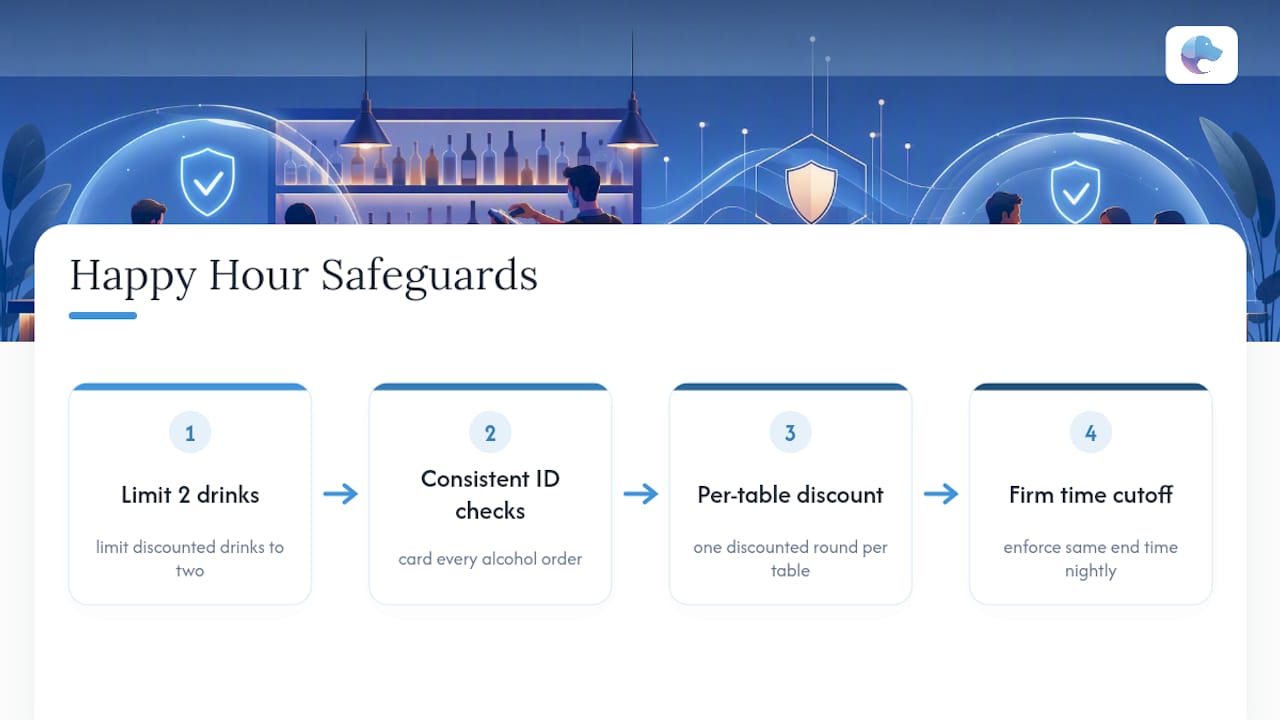
Cap quantities per person, per visit. A common approach is limiting discounted drinks to two per guest, then switching to full price after that, which protects margin on your heaviest drinkers without feeling punitive to everyone else. State the limit clearly on the menu or table card so servers aren’t put in the position of enforcing an unwritten rule mid-shift.
Require ID checks consistently, not selectively. Every guest ordering alcohol gets carded the same way regardless of how busy the bar looks, both for legal compliance and to avoid the appearance of favoritism that creates awkward moments for staff.
Watch for split-check abuse, where a large group orders individually to multiply per-person discount limits. A simple house policy, one discounted round per table rather than per seat during peak crowding, closes that gap without slowing down service for smaller groups.
Time-box the promotion tightly and stick to it. A happy hour that quietly runs long because the bar is busy trains regulars to expect the discount at 8pm, undermining the entire pricing structure you built. Enforce the cutoff the same way every single night, even when the room is packed and moving the deadline back would be the easy call.
Does Happy Hour Cheapen Your Brand?
It shouldn’t, and it doesn’t have to. The venues that get this wrong treat happy hour as a clearance sale, dumping their least interesting drinks at the steepest discount just to move volume. Guests notice, and it teaches them to associate your bar with bargain-bin pricing rather than the experience you actually built.
The venues that get it right treat happy hour as a preview of what makes the place worth visiting at full price. A tasting flight, a featured cocktail, a small-plates menu that hints at what’s on the full dinner menu, these formats sell the brand instead of undercutting it. Guidance from operator resources on turning happy hour guests into dinner customers backs this up directly: menu previews and small versions of signature dishes convert far better than a straight percentage off everything.
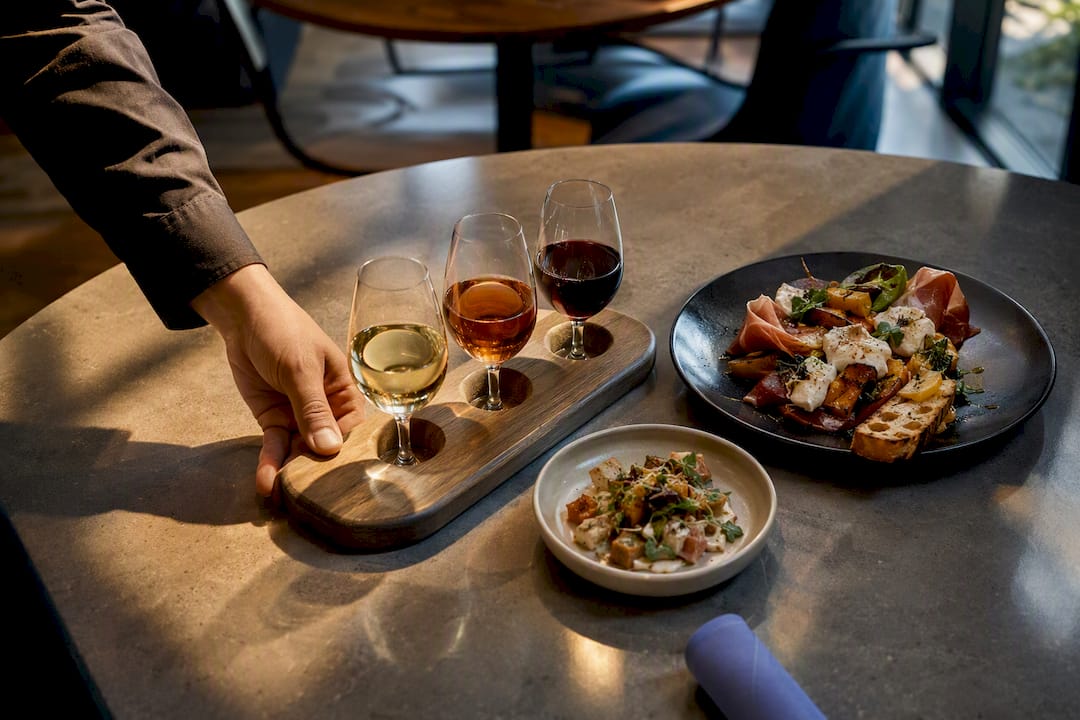
The tell is usually in the language you put on the menu and in your marketing. “Wind-down Wednesday: tasting flight and small plates” signals a reason to come back even without the discount. Same time slot, same rough cost to the business, completely different message to the guest about what kind of place you’re running.
Publisher Perspective: Why Thoughtfully Designed Happy Hours Earn Repeat Customers
The venues that treat happy hour as an experience, not a clearance event, are the ones that turn one visit into a habit. Discounting hardest doesn’t win loyalty. Designing well does. Consistent timing and honest measurement turn a promotion into a real acquisition channel instead of a guessing game. One caution stands above the rest: track margin weekly, because a packed room and a losing slot can look identical from behind the bar until the numbers say otherwise.
— Gregory
How EventHound Helps Fill Your Happy Hour
A local discovery platform is a fast way to put your happy hour promotion in front of people already searching for something to do nearby tonight, not next week. Instead of hoping your regulars remember to check your Instagram story, your listing shows up when someone in your neighborhood is actively deciding where to go for a drink after work.
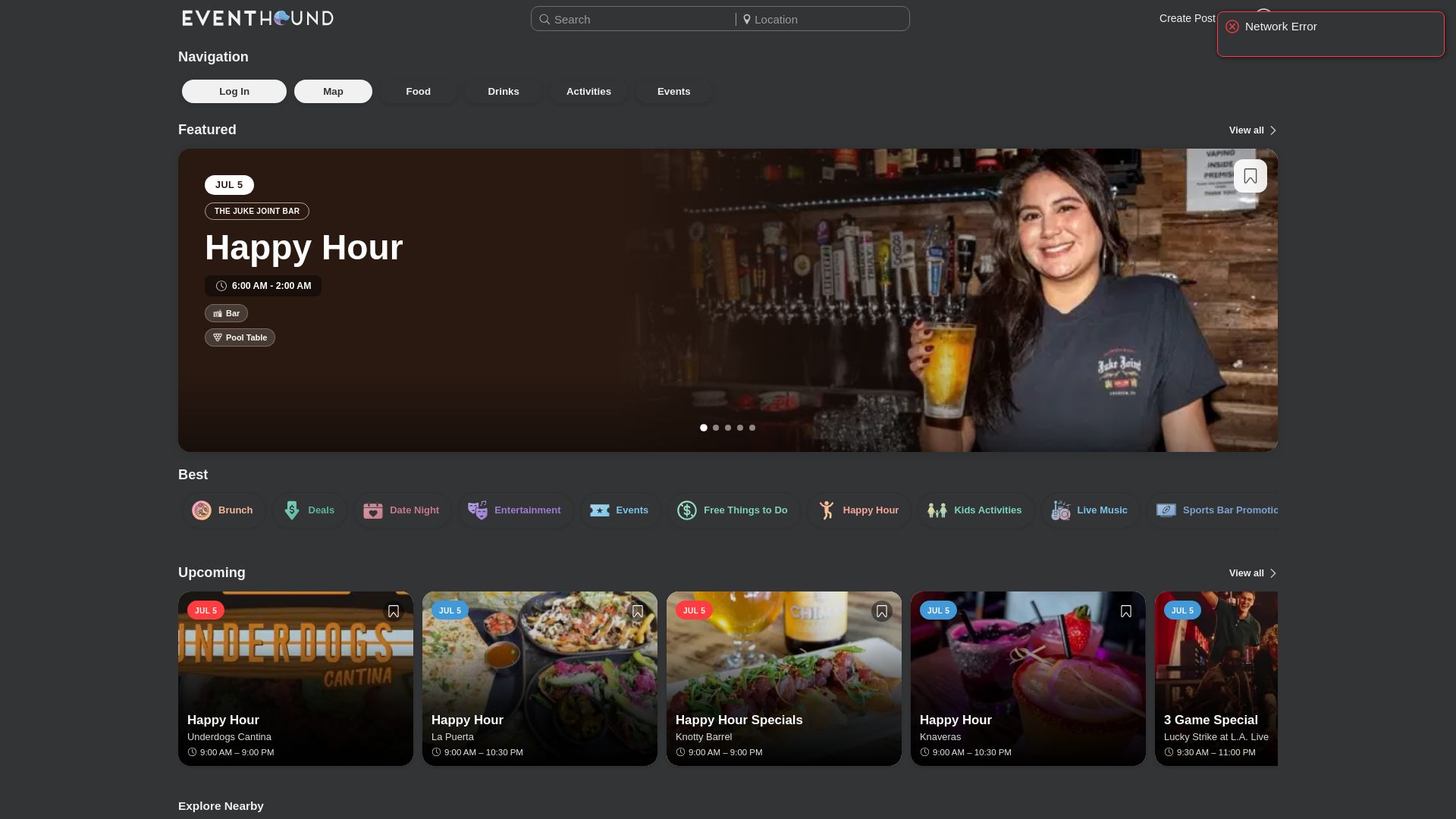
Three ways venues use it well: list your recurring happy hour with clear hours, featured drink, and price so it reads exactly like this Upland brewery listing; update the listing in real time when a special changes so searchers never see stale information; and boost visibility on your historically slow weekdays to pull in walk-ins who weren’t already planning to stop by. Pair your listing with a broader local ad push, like the tactics covered in King Digital Marketing Agency’s local advertising guide, if you want to extend reach beyond organic discovery. Head to EventHound’s how-it-works page to see what a listing looks like and get your happy hour in front of the people already looking for one tonight.
Sources
For deeper reading on the numbers behind this playbook, see Square’s data on happy hour transaction share, operator break-even analysis, and more quick promotion ideas to run alongside your happy hour.
- Profitable Happy Hour: Myth vs Reality 2026 · Trends
- Square Data Reveals ‘Summer of Aper’ as Spritzes Surge and Happy Hour Drives the Bar Scene
- restaurant-happy-hour-guide
- How to Run a Profitable Happy Hour Without Losing Money — KwickOS