33 Event Promotion Ideas That Actually Fill Seats
33 Event Promotion Ideas That Actually Fill Seats

Start here: if you only do three things, run a four-email drip to your warm list, cut a 15-second vertical video for social, and lock in one local partner with a trackable referral code. That combination consistently outperforms scattered, one-off marketing because it hits people who already trust you, then extends your reach through someone else’s audience, all before you spend a dollar on ads.
The rest of this list ranks the highest-leverage event promotion ideas by effort versus payoff, so you can pick what fits your timeline and budget today. Community organizers report that personal invitations and a tight email cadence beat almost everything else for local turnout, while EventTrack’s 2026 research shows marketers are pouring more budget into PR and content because it produces shareable impressions long after the ad spend runs out.
Here’s the priority stack, in order of impact for most local and regional events:
- Email drip to your warm list — four messages over four to six weeks beats one big blast every time.
- Short vertical video on social (Reels, TikTok, Shorts) showing what attendees will actually see or feel.
- One local partner with a referral code — a business, performer, or micro-influencer who already has your audience.
- A press pitch with a human angle, not a generic listing, sent four to six weeks out.
- Free community calendar and Nextdoor listings — often overlooked, almost always free traffic.
- A small, hyper-targeted paid ad test ($50 to $100) to find your best-converting audience before scaling spend.
- A listing on a local discovery platform like Eventhound, which puts your event in front of people actively searching for things to do nearby.
Do these three things in the next 72 hours: draft your first announcement email and schedule it, film one 15 to 30 second video on your phone, and message one potential partner with a specific ask (a shoutout, a flyer at their register, or a cross-post).
Pro Tip: Don’t wait for a “perfect” campaign plan before you send anything. A rough email sent today beats a polished one sent next week — momentum compounds, and early signups create social proof for everyone who sees the event later.
Key Takeaways
The most effective event promotion combines a warm-audience email sequence, one trackable partner referral, and a local discovery listing before any paid spend.
| Point | Details |
|---|---|
| Lead with owned channels | Send your email drip and activate partner referrals before spending on ads. |
| Use a four to six week email cadence | Four messages spaced over the campaign outperform a single announcement blast. |
| Track everything with codes | Assign unique promo codes or UTM links to every partner, volunteer, and ad set. |
| Prioritize PR with a human angle | A specific, quotable line increases your odds of earning local press coverage. |
| List where people are already searching | A listing on Eventhound puts your event in front of local audiences actively looking for things to do. |
Table of Contents
- Digital Event Promotion Ideas by Channel
- How Do You Optimize Registration to Boost Conversions?
- How Do You Get Local Businesses and Micro-Influencers to Help Promote an Event?
- How Do You Get Local Press and Community Coverage for Free?
- What Guerrilla Marketing Tactics Work for a Low-Budget Event?
- How Do You Run a Contest or UGC Campaign That Actually Drives Ticket Sales?
- What’s a Realistic Event Promotion Timeline?
- What Metrics Matter Most for Measuring Event Promotion Success?
- Ready-to-Use Templates and a One-Page Campaign Checklist
- How Eventhound Helps You Promote Your Event Without a Marketing Team
- Sources
Digital Event Promotion Ideas by Channel
Digital promotion works best when you treat each channel as a different tool for a different job, not a place to copy-paste the same post four times. Email nurtures people who already know you. Social finds new eyes. Paid ads scale what’s already working. Content marketing keeps bringing people in long after the event ends.
Email: the highest-converting channel for warm audiences
A four-message drip sequence, sent over four to six weeks, consistently outperforms a single announcement email. Here’s a sequence structure that works for most local events:
- Save-the-date (six weeks out): Short, simple. Subject line: “Mark your calendar: [Event Name] is coming.” One sentence on what it is, one on why it matters, a link to learn more.
- The details email (three weeks out): Full description, lineup or agenda, ticket link, and a reason to act now (early-bird pricing, limited capacity). Subject line: “Here’s everything you need to know about [Event Name].”
- Social proof and urgency (one week out): Mention who’s already coming, share a photo from last year if you have one, and push a deadline. Subject line: “One week left — here’s who’s already going.”
- Day-before logistics (24 hours out): Parking, entry instructions, weather notes, what to bring. Subject line: “See you tomorrow — here’s what to know.”
Segment your list into past attendees, engaged social followers, and partner or vendor contacts. Past attendees get a slightly warmer tone and an early-access window. For a deeper walkthrough of sequencing and list segmentation, Eventhound’s email marketing playbook for organizers breaks down subject-line testing and send-time optimization.
Social and video: make it feel native, not like an ad
Snackable video wins over polished production almost every time on Reels and TikTok. A behind-the-scenes clip of setup, a 10-second speaker or performer spotlight, or a “three reasons to come” list format all tend to outperform static flyers.
Two caption templates you can adapt right now:
- “You’ve got [X days] left to grab a spot at [Event Name]. Here’s what you’re not going to want to miss: [one specific detail]. Link in bio.”
- “We asked people why they’re coming to [Event Name] this year. Their answers surprised us. [One quote or reason]. Tickets are going fast. Link in bio.”
Paid ads: small budget, tight targeting
Local event marketing benefits from a multi-channel paid approach, but only when the targeting is precise. Hyper-local, interest-based ad sets on Facebook, Instagram, and Google Search perform better than broad campaigns, and testing in small increments lets you find winners before you commit real money.
A simple hyper-local targeting checklist:
- Geo-radius set to 10 to 25 miles from the venue, adjusted for whether it’s a neighborhood event or a regional draw.
- Interest layers matching your event category (food festivals target “farmers markets” and “local dining,” not just “events”).
- A retargeting audience built from website visitors and video viewers who didn’t convert.
- A lookalike audience from your past ticket buyers, if you have that data.
Start with $50 to $100 across two or three ad sets, watch cost-per-click and conversion rate for 48 hours, then shift the full budget toward whichever set is converting. Marketers running lean budgets see the best return by exhausting owned channels first and treating paid spend as an amplifier, not a starting point.
Content marketing: your landing page is doing more work than you think
Your event landing page should load fast, answer “what, when, where, and why” above the fold, and include a single clear ticket button. Add an FAQ section addressing parking, accessibility, and refund policy; search engines and AI assistants both favor pages that answer real questions directly.
Pro Tip: If you don’t have a designer, browser-based AI image tools can generate a clean flyer or social graphic in minutes. Prompt with specifics: event name, date, one visual theme (string lights, neon, rustic wood), and your brand colors. Skip the generic stock-photo look.
How Do You Optimize Registration to Boost Conversions?
Most ticket drop-off happens because the path from “interested” to “purchased” has too much friction. Fixing that path usually matters more than driving additional traffic to a broken funnel.
Run through this mobile-first checklist before your next campaign push:
- Page loads in under three seconds on mobile data, not just Wi-Fi.
- Registration form fits in a single column with no more than five fields.
- Date, time, and location appear above the fold, not buried below a hero image.
- One primary call-to-action button, repeated at the top and bottom of the page.
- A QR code on printed materials that links straight to the mobile checkout page, not the homepage.
Pricing tactics can push undecided browsers toward a decision. Early-bird pricing that expires on a specific date (not “for a limited time,” which reads as vague) creates real urgency. Referral discounts, where a buyer gets $5 or 10% off for sharing a unique link, turn attendees into promoters. Tiered pricing, such as general admission, VIP, and a group rate for four or more tickets, lets you capture different budget levels without discounting your top tier.
For a small A/B test that actually tells you something in a week or two:
- Test headline framing: benefit-driven (“Taste 20 local breweries in one afternoon”) against event-name-driven (“Annual Craft Beer Festival”).
- Test CTA button copy: “Get Tickets” against “Save My Spot” or “Reserve Now.”
- Test one price point: a $5 difference on early-bird pricing to see if it changes conversion volume enough to offset the lower margin.
Finish your conversion setup with a tracking checklist: unique referral links for each partner, UTM parameters on every social and email link (source, medium, campaign name), and one or two relevant upsells on the checkout page, like parking passes or merchandise, that don’t complicate the primary purchase.
How Do You Get Local Businesses and Micro-Influencers to Help Promote an Event?
Partnerships work because you’re borrowing trust someone else already built. The right partner doesn’t need convincing, they need a clear, low-effort ask.
Who to approach:
- Complementary local businesses (a coffee shop near your fitness event, a bookstore near your author talk).
- Community organizations with an existing mailing list or member base.
- Performers, vendors, or speakers who benefit from more attendees.
- Micro-influencers with a few thousand to tens of thousands of followers, who typically deliver stronger engagement rates than larger accounts and often work for free tickets or VIP access rather than a fee.
A short outreach email that gets responses:
“Hi [Name], we’re hosting [Event Name] on [date] and think your audience would love it. We’d love to offer you [free tickets/VIP access/a shoutout in our program] in exchange for a mention on your page. We’ll send you ready-to-post graphics and captions so it takes five minutes. Interested?”

Supply every partner with the same simple kit: two or three prewritten social captions, a one-click ticket link with their unique promo code baked in, and a suggested posting window (ideally two to three weeks and again one week before the event). This removes the biggest reason partnerships fall through: partners forget or don’t know what to post.
To measure partner ROI without building a complicated system, track ticket sales against each partner’s unique promo code or UTM-tagged link, then send a simple thank-you message afterward reporting the results back to them. Partners who see real numbers are far more likely to help again next time. Local directories can extend this reach too. A resource like the Southern California local business directory is worth exploring if you’re looking for complementary businesses in your area to approach cold.
How Do You Get Local Press and Community Coverage for Free?
Earned media takes longer to land than a paid ad, but it carries credibility no ad can buy, and marketers are increasingly prioritizing PR and content investment specifically because the resulting coverage keeps generating impressions well after publication.
Build your media list in four steps:
- List every local news outlet, blog, and radio station that covers community events or your specific category (arts, food, sports).
- Find the specific reporter or editor who covers that beat, not a generic “info@” inbox.
- Send your pitch four to six weeks before the event, giving reporters time to plan coverage.
- Follow up once, at the two-week mark, with something new to offer, like a photo opportunity or an update.
Your one-page press release should answer:
- Who is hosting it and who it’s for.
- What the event actually is, in one clear sentence.
- When and where, with exact date, time, and address.
- Why it matters to the local community right now.
- A quotable line from a real organizer that could serve as the reporter’s lead.
Reporters respond better to a specific, human quote that writes their opening line for them than to a generic listing of facts. Skip “we’re excited to host this event” and go with something concrete: “Last year we had 40 people show up in the rain. This year we’re expecting 300, and half of them found us through a neighbor’s Instagram story.”
Pitch angles that tend to land:
- Human-interest: a founder’s story, a first-time vendor, a milestone anniversary.
- Community impact: proceeds going to a local cause, jobs created, a neighborhood revitalized.
- A surprising stat: attendance growth, an unusual collaboration, a record turnout from last year.
Round out your free coverage with a community calendar submission checklist (most cities and regional tourism boards run one), and post to Nextdoor with a specific, neighborhood-relevant hook rather than a copy-pasted flyer description. Eventhound’s guide to free and local listing channels rounds up additional no-cost places to submit your event.
What Guerrilla Marketing Tactics Work for a Low-Budget Event?
Creativity beats cash more often than most organizers expect. A clever guerrilla idea or a native-feeling social clip can outperform a small paid campaign if it creates a moment people genuinely want to share.
Run your low-budget playbook in this order:
- Pick one high-visibility placement. A busy sidewalk corner, a coffee shop bulletin board, or a spot near a complementary business’s entrance.
- Create a phone-first visual. Chalk art on a sidewalk, a sandwich board with bold, simple type, or a surprise pop-up activation that photographs well.
- Amplify it on social immediately. Post the guerrilla piece the same day, tagged with your event hashtag, so foot traffic and online reach reinforce each other.
- Recruit a small street team. Friends, volunteers, or paid part-timers who hand out flyers with a unique code printed on each one.
- Track the codes. Gamifying volunteer tracking with unique codes lets you see exactly which ambassador drove the most sign-ups, and you can reward the top performer with a free ticket or merchandise.
Low-cost tracking can be done with simple tools. A short URL on each flyer, paired with a volunteer’s initials, helps identify which flyer drops converted. Chalk art, sandwich boards, and small pop-up activations typically cost very little in materials, according to organizers who’ve run these campaigns on shoestring budgets, making them one of the cheapest tactics on this entire list relative to the attention they generate.
Pro Tip: Pair every guerrilla stunt with a timed social post asking people to share a photo if they spot it. A simple “find the chalk art and tag us for a shoutout” turns a static installation into a live, trackable piece of user-generated content.
How Do You Run a Contest or UGC Campaign That Actually Drives Ticket Sales?
Contests work when the mechanics reward the actions you actually need: tagging friends, sharing to a story, or following your account, not just showing up to win something.
A simple, effective contest structure:
- The ask: Tag two friends, share the event post to your story, and follow the event account to enter.
- The prize: Two free tickets plus a small add-on (parking, a drink ticket, early entry).
- The anti-fraud layer: Require a public tag or share, not a private message, so entries are verifiable. Post clear terms and conditions, including an entry deadline and how the winner will be notified.
Use one consistent, branded hashtag across every post so entries and mentions are easy to find and repost. Something short and specific to the event, not a generic phrase already used by thousands of other posts, works best for discoverability.
Before reposting any attendee content, get explicit permission, either through a comment reply or a direct message, and always credit the original poster in your caption. This protects you legally and builds goodwill that makes people more likely to post again next year.
Turning UGC into usable promo assets doesn’t require much: crop the photo or clip to vertical format, add your event name and date as a small text overlay, and credit the creator in the caption before reposting to your own story or feed.
Pro Tip: Most organizers struggle here more than they expect. Only about a third of event marketers say they can confidently measure which UGC actually drives future registrations. Build a simple spreadsheet tracking which reposted UGC pieces got the most clicks on your bio link, even if it’s manual, so you’re not flying blind next time.
What’s a Realistic Event Promotion Timeline?
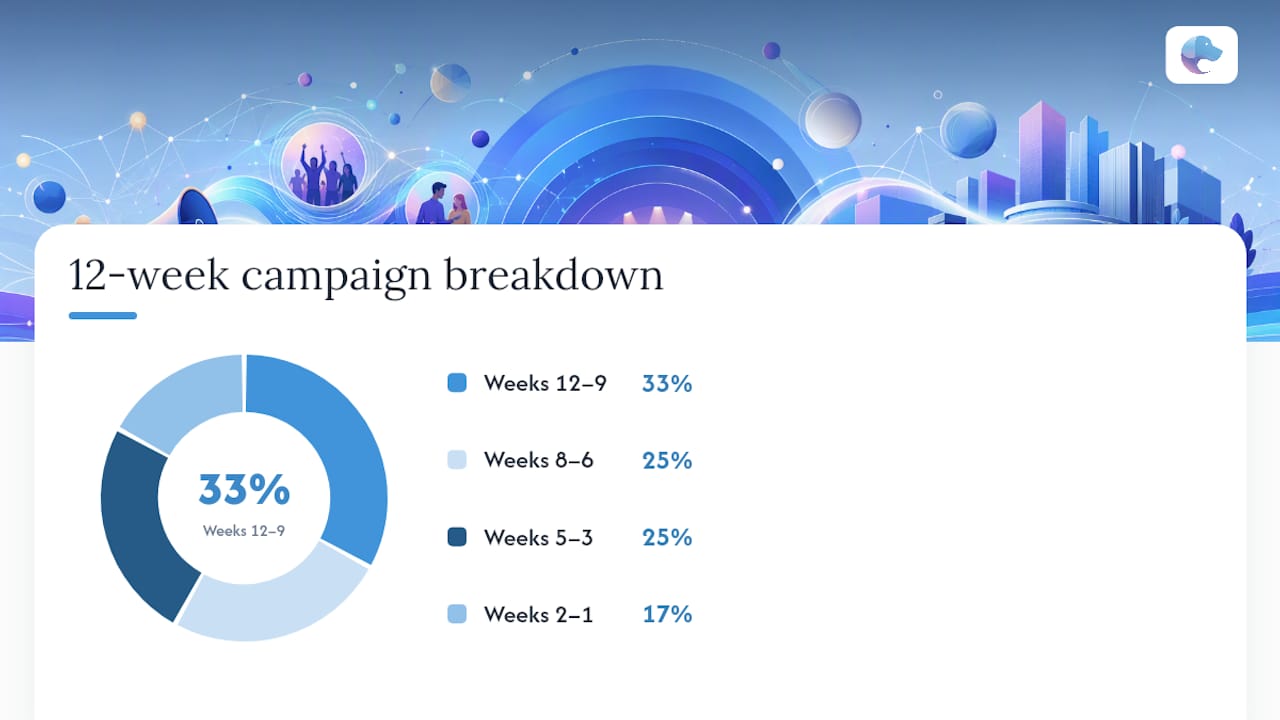
Timing determines whether your campaign builds steady momentum or turns into a last-minute scramble. Larger events need more runway; smaller local ones can move faster.
12-week timeline (regional festivals, ticketed conferences, larger community events):
- Weeks 12 to 9: Announce save-the-date, start building your press list, and begin partner outreach conversations.
- Weeks 8 to 6: Launch early-bird pricing, send press releases, and start seeding content (behind-the-scenes video, speaker announcements).
- Weeks 5 to 3: Ramp paid ads, activate partner promo codes, and run your first contest or UGC push.
- Weeks 2 to 1: Send urgency-driven emails, follow up with press contacts, and push last-chance social content.
- Week of: Day-before logistics email, final social push, and on-site UGC prompts.
6-week timeline (standard local events, meetups, workshops):
- Week 6: Save-the-date email and social announcement.
- Week 4: Detailed announcement email, partner asks go out, community calendar submissions.
- Week 3: Paid ad test launches, first contest post.
- Week 2: Social proof push, second partner reminder.
- Week 1: Urgency email, last-chance social content, press follow-up.
- Day before: Logistics email and final reminder post.
Week-of and day-before checklist:
- Confirm parking and entry instructions are posted on your landing page.
- Brief on-site staff or volunteers on the referral codes and hashtag so they can prompt attendees to post.
- Send the day-before logistics email at a consistent time (morning works better than evening for next-day events).
- Print a small stack of QR-code flyers for last-minute walk-ups who haven’t registered online.
A simple touchpoint tracker, noting the channel, the owner responsible, and the send date for each item, keeps a small team from duplicating effort or missing a step during the busiest weeks.
What Metrics Matter Most for Measuring Event Promotion Success?
You can’t tell what’s working without tracking the right numbers, and most organizers track too many vanity metrics and not enough of the ones tied to actual ticket sales.
Here’s what matters, and why:
| Metric | Why it matters |
|---|---|
| Tickets sold | The bottom-line measure of whether promotion converted interest into revenue. |
| Conversion rate | Shows whether your landing page and offer are working, separate from traffic volume. |
| Cost per acquisition | Tells you which channel is actually affordable once you count ad spend and time. |
| Referral rate | Reveals how much of your growth comes from existing attendees sharing with others. |
| UGC volume | Signals organic buzz and gives you free promotional assets for next time. |
Set up your attribution before launch, not after. Use a consistent UTM naming convention (source, medium, campaign) on every link you share, assign a unique promo code to each partner, and add a simple “how did you hear about us” field at checkout or check-in. This single question often reveals which channel is actually driving sales, even when your analytics dashboard says otherwise.
For your dashboard, keep it simple: check daily ticket sales and ad spend during the final two weeks, and review weekly totals for email open rates, referral code usage, and UGC mentions throughout the rest of the campaign. Overcomplicating this step is one of the most common reasons small teams stop tracking altogether. Eventhound’s breakdown of analytics structure and reporting roles is a useful reference if you’re setting this up for the first time with a small team.
Ready-to-Use Templates and a One-Page Campaign Checklist
Having the right ideas doesn’t help much if you’re rebuilding every template from scratch each time. Keep a single-page checklist that assigns an owner, a deadline, and a channel to each task, so nothing falls through when things get busy in the final week.
One-page checklist structure:
- Task, owner, deadline, channel, and a link to the relevant template, listed as one row per activity.
- Color-code or flag anything due in the final week so it’s impossible to miss.
Email templates you can adapt today:
- Announcement: “We’re excited to bring you [Event Name] on [date]. Here’s what you need to know: [three key details]. Grab your spot before early-bird pricing ends.”
- Reminder: “Just two weeks until [Event Name]. Here’s what’s happening and why you don’t want to miss it: [one compelling detail].”
- Last-chance: “This is it. [Event Name] is [X days] away, and tickets are almost gone. Here’s your last chance to grab a spot.”
- VIP outreach: “You’re one of our most engaged supporters, so we wanted to give you early access to [Event Name] before we open it up to everyone else.”
Three short video scripts for Reels or TikTok:
- A five-second hook (“You haven’t seen a [event type] like this before”) followed by three quick clips of setup, product, or past-event highlights.
- A 10-second “meet the [performer/vendor/speaker]” spotlight with one compelling line about why they’re worth seeing.
- A “come with me” walkthrough of the venue or setup process, ending with the date and ticket link on screen.
Channel fit for different event types:
| Channel | Best fit |
|---|---|
| Email drip | Events with an existing list, repeat attendees, or membership base. |
| Social/video | Visually interesting events (festivals, markups, live performances). |
| Paid ads | Time-sensitive events needing a fast audience beyond your existing reach. |
| Local press/PR | Community-impact events, milestones, or first-time large gatherings. |
| Local listing platforms | Any event trying to reach people actively searching for things to do nearby. |
An organizer’s honest read on what actually moves the needle
Most of the campaigns that quietly outperform expectations aren’t the ones with the biggest ad budgets. They’re the ones where an organizer handed a stack of flyers with unique codes to five volunteers, then noticed one volunteer’s code accounted for a third of walk-up sales, and doubled down on whatever that person was doing right, whether it was a specific coffee shop or a specific script they used when talking to strangers. That’s the part conventional advice skips: the payoff isn’t in having more tactics, it’s in noticing which one is quietly working and starving the ones that aren’t.
If you’re deciding what to cut when time or budget runs short, cut the paid ad test before you cut the email sequence or the partner outreach. Owned channels and warm relationships convert at a fraction of the cost of paid reach, and they don’t disappear when your ad budget does. Spend your limited hours where you already have trust, then use whatever’s left to test paid amplification on the idea that’s already showing signs of working.
How Eventhound Helps You Promote Your Event Without a Marketing Team
Eventhound puts your event in front of people who are already searching for something to do nearby, which solves the hardest part of promotion: reaching people who don’t know you yet but are actively looking. Instead of building an audience from zero through ads or cold outreach, you tap into a local audience that’s already browsing for live music, festivals, family activities, and community events in their area.
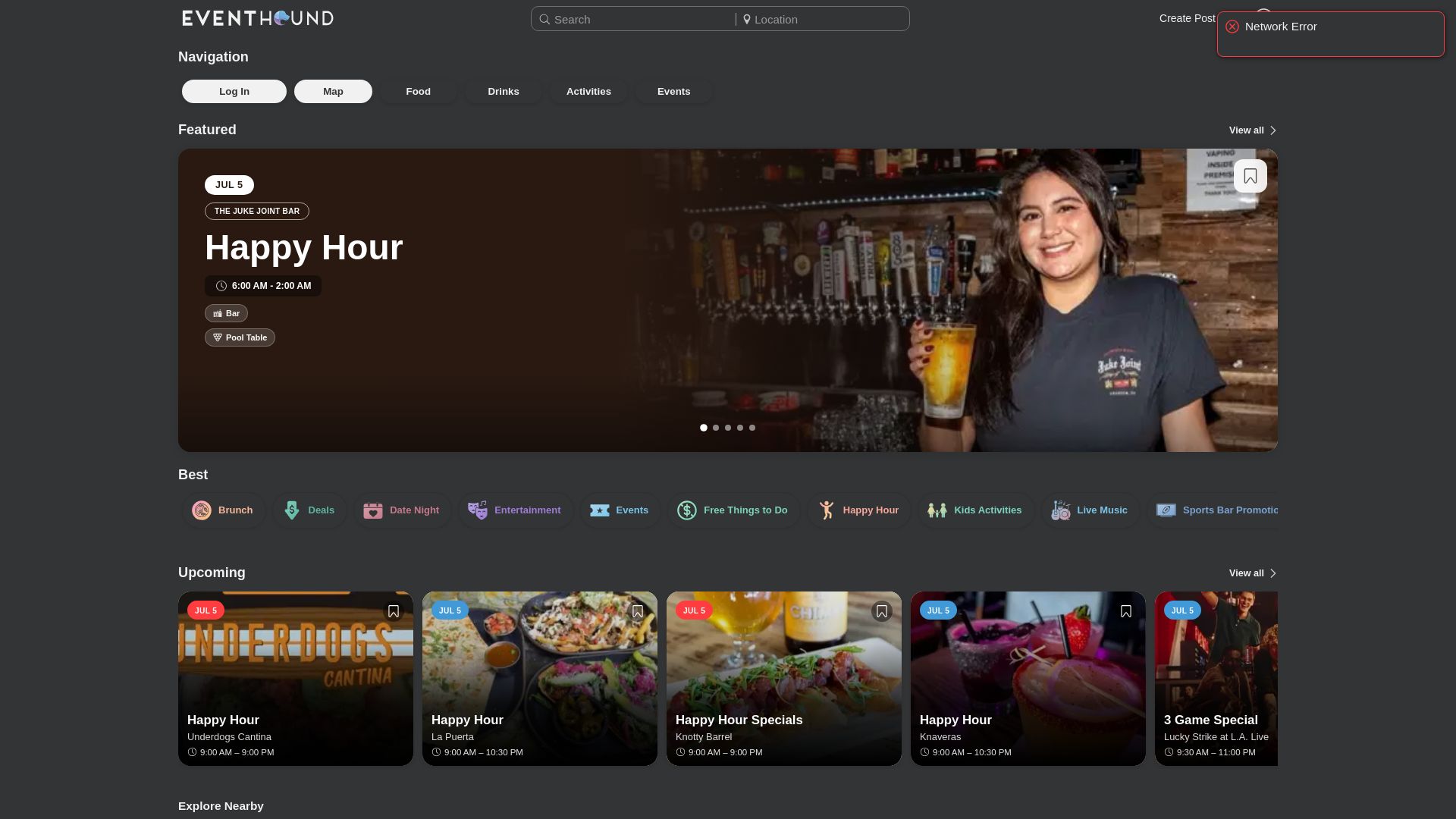
Getting started takes three steps. First, claim your business so your listing is verified and searchable. Second, post your event with clear details, a strong photo, and any special pricing or early-bird offers. Third, let Eventhound’s AI-driven recommendations surface your event to people based on their location and interests, so you’re not relying only on your own reach to fill seats. The platform’s posting flow is built for organizers who need something fast and straightforward, not another complicated dashboard to learn. If you’re ready to get your event in front of local audiences, start by claiming your business listing today.
Sources
- Selling Out on a Shoestring: Low-Budget Event Marketing Strategies for 2026 | Ticket Fairy Promoter Blog
- How to Promote Your Event When You Have No Marketing Budget | Somiti
- Local Event Marketing: Filling Seats on a Budget
- EventTrack 2026 (EventMarketer)